Goat Farming
The Goat Industry
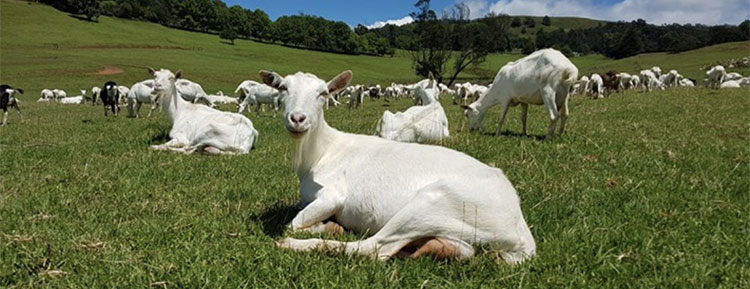
From early beginnings supplying milk, meat and hair for the family, the goat has evolved into an animal that is mainly kept for commercial purposes. The goat industry in Ontario has seen steady growth over the last decades. Increasing demand for goat milk, cheese and other dairy goat products stimulated the further professionalization of the dairy goat industry.
There are approximately 230 commercial dairy goat farms in Ontario, according to the Ontario Ministry of Agriculture, Food and Rural Affairs (OMAFRA). Although most of the operations are found in Southwestern Ontario, some of the Ontario Dairy Goat Co-operative’s producers farm in Northern and Eastern Ontario.
The dairy goat farms can be divided into three categories: farms with small herds up to 200 goats, medium size farms with herds from 200 to 400 animals and the bigger operations with up to 1,000 goats. Breeds most commonly kept for milk production are Saanen, Alpines, Nubians, Toggenburgs and La Mancha’s.
Ontario Dairy Goat Co-operative
Members of the Ontario Dairy Goat Co-operative (ODGC) represent all of the three categories. ODGC currently has over 130 members with production levels between 600 to 1000 liters of milk per goat, per year.
Milk Quality
The Ontario Dairy Goat Co-operative is pro-active in producing a high quality product. To achieve this, we have taken several steps:
seven ODGC trucks pick up milk from each farm twice every week;
the University of Guelph, Lab Services, conducts bactoscan and component tests on milk samples on a regular basis and reports results back to producers;
a penalty system is in place if the milk does not meet stringent quality standards;
an incentive is paid for milk achieving the highest level of quality;
OMAFRA representatives offer on-farm assistance if problems occur.
ODGC is the first organization in the goat industry to provide goat farmers with their lab results on-line, giving them fast access to their test results. Since 2012, Bactoscan testing at the University of Guelph provides results, usually the next day, which is much quicker than the previously used Standard Plate Count tests.
OMAFRA also provides on-farm inspection and advisory services to dairy goat producers through Raw Milk Specialists and other resources. Annual inspections are conducted under the authority of the Milk Act (Ontario) and Regulation 761 to ensure farm premises meet and maintain the highest standards for quality milk production.
Milking
Goat farmers have milk equipment and parlours similar to the cow industry. Parlours vary in size from single 6 to double 36. The number of milkers does not necessarily have to equal the number of goats. For example, in a double 24 parlour there can be 12, 18 or 24 milkers with or without automatic take off.
Housing
With goats being smaller animals compared to cows, many different buildings are suitable for housing them. Renovated bank barns, former chicken, hog and cow barns, and new facilities have all successfully housed goats. Goats enjoy bedded packs with straw or sawdust. With many animals to handle, goat farmers have to make sure their set up is as efficient as possible.
Feed
Good feeding practices lead to high milk production. This can be done in various ways. The goats are fed forages, which can include hay, haylage, corn silage and various by-products such as brewers grain and beet pulp. Dry hay can be fed in round bale feeders or along the feed alley. Newer and bigger operations are more likely to be set up for ensilaged feed. Dairy goats are supplemented with grain, which can be homegrown or purchased. Contrary to public opinion, goats are very selective about their diet.
Young Stock
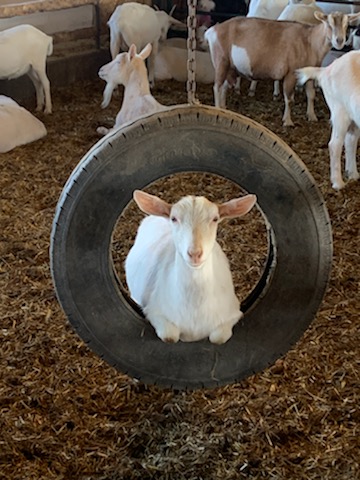
Raising young stock is an intense job on a goat farm because most goats give birth only once each year, but to multiple kids. On most goat farms only the female kids are kept and raised. Some farmers feed their goat kids cow colostrum, others leave the kids with the nanny for a few days. Some diseases are transferrable through the colostrum and therefore it is very important to ensure that good colostrum is fed to the kids. After this stage, the kids are fed milk replacer with bottles, nipple pails or with an automatic kid feeder.
Breeding
Goats are fall breeders by nature and have their young in the spring. By using different techniques, producers work hard to have their goats kidding throughout the year. With a fall incentive and educational workshops/study groups, the co-op encourages its members to level out the milk production over the whole year. Most of the goat farmers use bucks for breeding, but more farmers are looking into artificial insemination to improve their genetics.